
This post contains Amazon affiliate links. As an Amazon Associate I earn from qualifying purchases.
Disclaimer: While this post aims to provide informative insights, it’s important to note that I am not a doctor, dermatologist, or medical esthetician. For personalized skincare advice, it’s always best to consult a licensed medical professional, ensuring you make informed decisions about your skincare routine.
A facial cleansing brush is a handheld device with silicone or bristle heads that oscillates or vibrates to loosen dirt, oil, and dead skin from your face. It does a more thorough job than washing with your hands, because the movement gets into pores that fingers just press past.
The main benefit is the deeper clean. Beyond that, regular use helps with exfoliation, which over time smooths texture and helps your serums and moisturizers actually absorb instead of sitting on top of a layer of buildup.
I’ve tried several of these over the years and have opinions about which features matter and which are marketing. What follows covers how to pick one and why I landed on the PMD Clean line after starting with a Clarisonic.
Choosing the Right Facial Cleansing Brush for Your Skin
Your skin type matters here, but less than you might think. Most people can use a cleansing brush. The differences are in how often and which head you use.
Oily and acne-prone skin gets the most obvious benefit. The oscillation breaks up the stubborn oil and dirt that builds up in pores, which is closer to what you’d get from a professional facial than plain hand-washing.
Sensitive skin can still use a cleansing brush. You just want soft, rounded silicone bristles rather than stiffer nylon ones. Silicone is gentler and considerably more hygienic, since it doesn’t trap bacteria the way fabric bristles do.
For dry and normal skin, once or twice a week is plenty. The main draw there is the exfoliation and absorption boost rather than deep pore cleaning.
On the practical side: buy a brush made from silicone that doesn’t need replacement heads. Replacement heads are an ongoing cost and a recurring hygiene question. Silicone brushes also last longer, produce less waste, and most of them are waterproof so you can use them in the shower.
How to Use a Facial Cleansing Brush
There’s not much technique to learn, but a few things make the difference between getting good results and irritating your skin.
Start with a wet face and apply your cleanser, either directly to your skin or onto the brush head. Turn the brush on and move it in small circles: forehead, nose, chin, then each cheek. Use light pressure. The oscillation does the work, and pressing harder doesn’t clean deeper. It just irritates.
The whole thing takes about a minute. Many brushes pulse at intervals to tell you when to move to the next area of your face. Avoid the eye area, rinse when you’re done, and follow with the rest of your routine. Your skin absorbs serums better right after cleansing, so don’t wait around.
On frequency: once a day is fine for oily or acne-prone skin, ideally in the evening when you’re washing off the day’s buildup. If your skin is sensitive or dry, start with two or three times a week and watch how it responds. Over-cleansing shows up as tightness, redness, or flaking. If you see any of those, scale back.
The PMD Clean Line
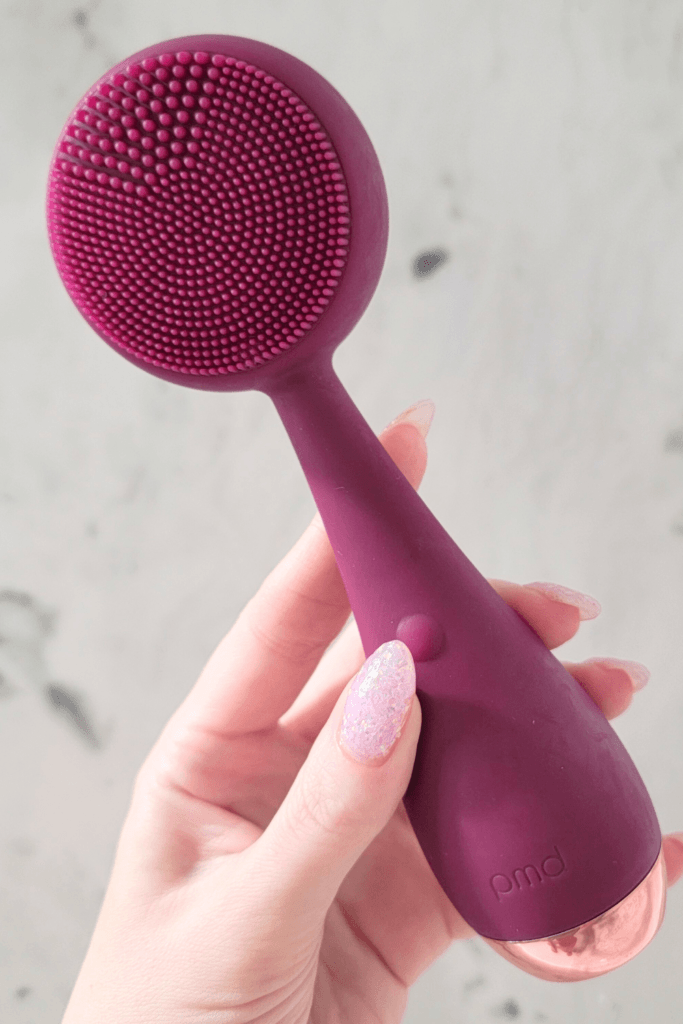
I’m a fan of the PMD Clean lineup for a few reasons: no replacement heads, silicone construction that’s both antibacterial and hypoallergenic, and every model is fully waterproof. Sink or shower, either works.
My first cleansing brush was a Clarisonic. It worked well, but I was constantly torn between spending money on replacement heads and wondering whether the one already on the brush was too worn to be effective. When I switched to the PMD Clean Pro, that stopped being a problem.
I’ve been using my PMD Clean Pro for over six years. It still works the same as it did when I bought it, holds its charge well, and has been easy to keep clean.
If your main concern is acne, a cleansing brush can help by keeping pores clearer and reducing the buildup that leads to breakouts. It’s not a treatment tool, but it’s a reasonable support for whatever else you’re using.
Selecting the Perfect PMD Clean Brush
Each model in the PMD Clean line uses the same silicone cleansing side. The differences are in what’s on the back and how the device is powered.
PMD Clean
The original. Silicone cleansing bristles on one side, smooth silicone for a facial massage on the other. Runs on a single AA battery.
PMD Clean Mini
Same as the original brush, smaller. Runs on AAA battery. Good if you travel a lot and want to keep your kit compact.
PMD Clean Pro
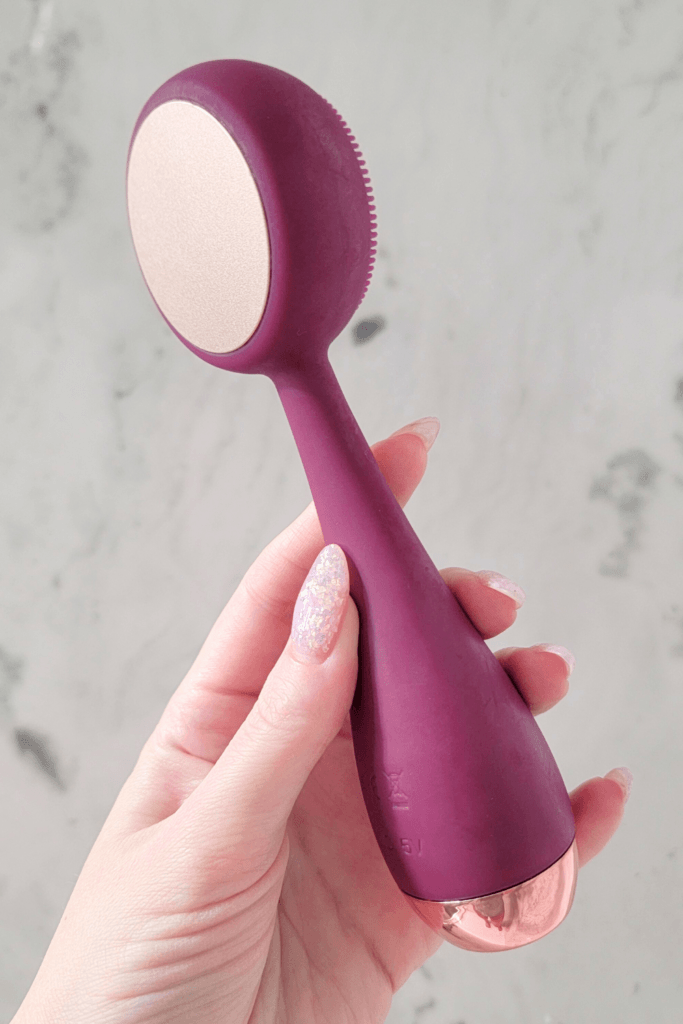
This is the one I use. The back side has a metal plate that heats up, which makes the facial massage more effective and also helps with serum and moisturizer absorption when you use it after applying products. It works over a sheet mask too. Rechargeable, no batteries needed.
The Pro is also available with gemstone or precious metal massage plates:
PMD Clean Acne
This version replaces the heated plate with blue light therapy. It’s one of the more expensive options in the lineup, and I’d skip it. You’re better off getting a PMD Clean Pro for the cleansing and warmth, then pairing it with a separate Hooga Wand that covers both red and blue LED. More functionality for less money.
PMD Clean Body
If body acne is a concern, this is worth knowing about. It has multiple magnetic attachments for cleansing, exfoliating, and massage, and it’s rechargeable like the Pros. It’s designed to be used in the shower.
Cleaning and Maintaining Your Brush
A cleansing brush that never gets cleaned is just moving yesterday’s dirt around your face, so the small amount of upkeep is worth doing.
Rinse the brush head thoroughly after every use and shake off the excess water. Once a week or so, wash it with a small amount of gentle soap and let it air dry completely. Don’t store it sealed in a bag or case while it’s still damp.
If you have a silicone brush, that’s the entire routine. Silicone doesn’t trap bacteria the way nylon bristles do, and there’s nothing to replace. Mine is six years old and counting.
If you went with a bristle-head brush instead, plan on replacing the head every three months or so. Worn bristles clean less effectively and hold onto more bacteria, and that recurring cost and guesswork is exactly why I recommend silicone in the first place.
Drop your favorite in the comments below.